
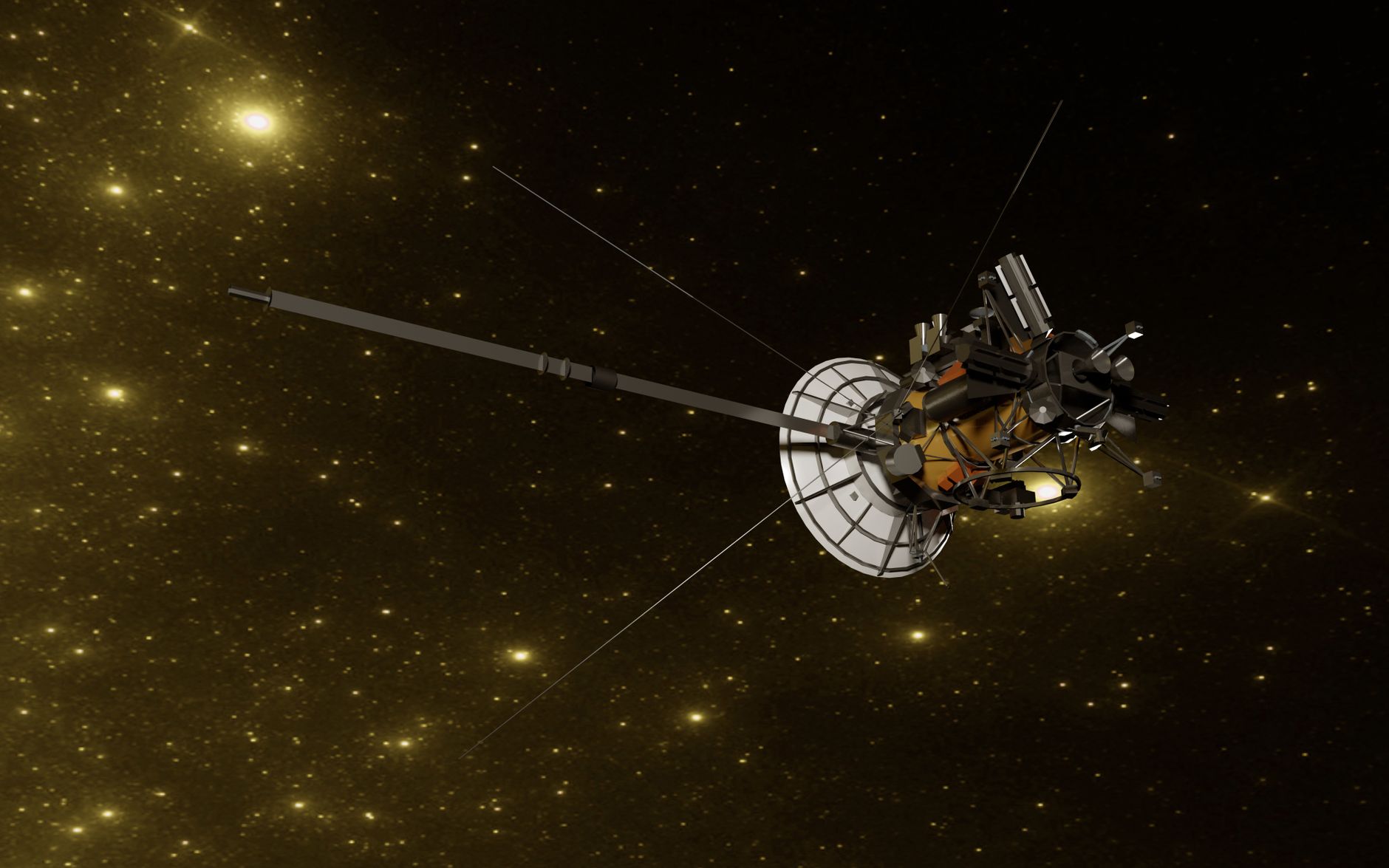
Voyager 1 deep space is reaching an incredible milestone as it continues its journey beyond our solar system. This spacecraft has been providing invaluable data for over four decades.
What is Voyager 1’s mission?
Launched in 1977, Voyager 1 has been on an extraordinary journey through our solar system and into deep space. Its primary mission was to explore the outer planets, including Jupiter and Saturn, and to return valuable data about their atmospheres, moons, and rings. Having successfully completed its initial objectives, Voyager 1 has continued to travel beyond the boundaries of our solar system, providing scientists with unique insights into the heliosphere and interstellar space.
The spacecraft is equipped with a suite of scientific instruments designed to measure magnetic fields, cosmic rays, and other phenomena. As Voyager 1 approaches deep space, it is expected to encounter new environments and conditions that have never before been studied. This phase of its mission is particularly exciting, as it offers the potential for groundbreaking discoveries about the nature of the universe beyond our solar system.
Key aspects of Voyager 1’s mission include:
- Exploration of the outer planets: Gathering data on Jupiter’s Great Red Spot and Saturn’s iconic rings.
- Interstellar exploration: Traveling beyond the influence of our Sun and studying cosmic phenomena.
- Communication with Earth: Continually sending back data over 45 years after its launch.
As it ventures further into the cosmos, Voyager 1’s legacy as a pioneer in space exploration remains unparalleled.
Voyager 1 deep space achievements
NASA’s Voyager 1 has made remarkable achievements since its launch in 1977, becoming the first human-made object to enter interstellar space. This milestone marked a significant leap in our understanding of the cosmos and the limits of our solar system. As Voyager 1 continues its journey through deep space, it provides invaluable data that enhances our knowledge of space environments beyond our planet.
Some of the key achievements of Voyager 1 in deep space include:
- Crossing the heliopause: In 2012, Voyager 1 crossed the boundary where the solar wind from the Sun meets the interstellar medium, a major milestone in its mission.
- Discovering new cosmic phenomena: The spacecraft has detected cosmic rays and magnetic fields that were previously unknown, helping scientists to understand the nature of the interstellar medium.
- Providing data on the solar system’s edge: Voyager 1 has sent back information about the characteristics of the outer solar system, offering insights into the behavior of solar particles and the environment of deep space.
- Capturing stunning images: The spacecraft has taken breathtaking images of planets and their moons, including the famous “Pale Blue Dot” photograph of Earth from billions of miles away.
As Voyager 1 continues its journey, researchers eagerly anticipate further discoveries that will deepen our understanding of deep space and our place within it.
Future of Voyager 1 in deep space
The future of Voyager 1 in deep space holds immense potential for new discoveries as it continues its journey beyond the boundaries of our solar system. Launched in 1977, Voyager 1 is the first human-made object to enter interstellar space, providing invaluable data about the environment beyond the influence of our sun. As it travels further, scientists are eager to learn more about the characteristics of deep space.
Currently, Voyager 1 is more than 14 billion miles from Earth, and it is expected to remain operational until at least 2025. As the spacecraft moves further away, it will collect data on cosmic rays, magnetic fields, and particle interactions in this uncharted territory. These observations are crucial for understanding the heliosphere and its interaction with the interstellar medium.
Future communications with Voyager 1 will be challenging due to the vast distances involved, but innovative techniques are being developed to ensure that data continues to flow back to Earth. The spacecraft is equipped with instruments designed to analyze the environment it encounters, including:
- The Plasma Wave Science experiment, which measures plasma waves in space.
- The Cosmic Ray Subsystem, which detects high-energy particles from outside the solar system.
- The Magnetometer, which studies magnetic fields in deep space.
As Voyager 1 ventures deeper into the cosmos, scientists remain optimistic about the insights it will uncover in the years to come.
The significance of deep space exploration
Deep space exploration, particularly through missions like Voyager 1, plays a critical role in expanding our understanding of the universe. As Voyager 1 continues to travel beyond the boundaries of our solar system, it provides invaluable data that can reshape our knowledge of cosmic phenomena.
The significance of deep space exploration can be highlighted through several key points:
- Understanding Cosmic Origins: Voyager 1’s journey helps scientists gather data about the early solar system and the formation of celestial bodies.
- Interstellar Insights: By venturing into deep space, Voyager 1 offers a unique perspective on the interstellar medium, the matter that exists in the vast regions between stars.
- Technological Advancements: The challenges of deep space exploration drive innovations in technology, which can have practical applications on Earth.
- Inspiring Future Generations: Missions like Voyager 1 ignite interest in science and exploration, encouraging young minds to pursue careers in STEM fields.
As Voyager 1 reaches these deep space milestones, it reminds us of the vastness of our universe and the mysteries that await discovery. The data collected during this mission will not only enhance our scientific knowledge but may also lay the groundwork for future explorations beyond our solar system.
The recent findings from Voyager 1 deep space have sparked renewed interest among scientists and astronomers. As the spacecraft continues its journey, Voyager 1 deep space promises to unveil even more secrets of the universe.
Photo by Paul Seling on Pexels